
Dawn Imaduddin Ahmed Published October 16, 2025
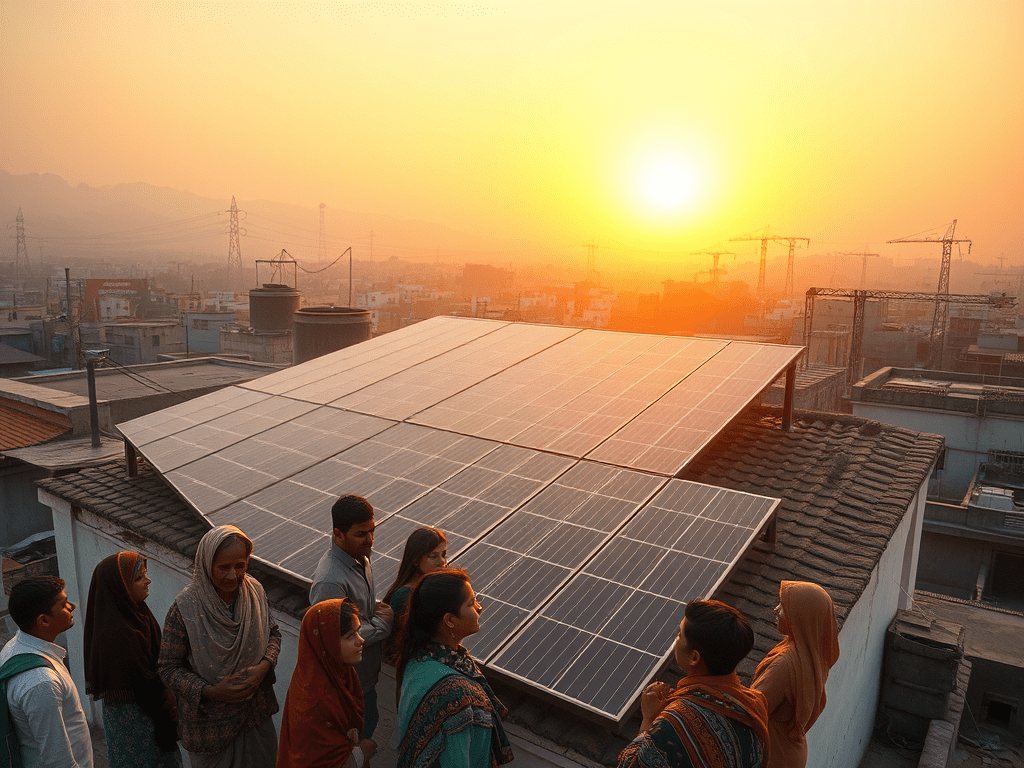
PAKISTAN’S rooftop solar boom is the canary in the mine for the rest of the world. The dawn of ultra-cheap renewables has arrived. Despite accounting for less than one per cent of grid capacity in 2023, solar is expected to account for a fifth of generated electricity by 2026. This radical shift is a signal to the rest of the world that pouring scarce public money into baseload fossil generation is no longer just environmentally reckless, but also fiscally dangerous and politically destabilising. What began as a middle-class hedge against blackouts, intolerable heat and soaring electricity bills has become a ‘run on the grid’ that is deepening the electricity grid’s circular-debt spiral.
A year ago, the IEEFA forecast that Pakistan’s net-metering rules created two-to-four-year paybacks for 5-25kW home systems. Then, adoption exploded. The scale of solar arriving at Pakistan’s borders has been unprecedented, importing 17GW of solar panels in 2024, more than all of Africa combined. This has benefited adopting householders’ wallets, and should have dramatically reduced pollutants and greenhouse gas emissions.
But there is a dark side to the rapid solar adoption. Grid defection creates a ‘sovereign doom loop’: as more consumers exit, fixed guaranteed payments get spread over fewer units sold. This creates a vicious cycle, encouraging further defection, and/or further increases the energy sector’s circular debt — a recurring cycle of unpaid financial obligations across the energy supply chain.
Coupled with IMF-imposed loan conditions to remove energy subsidies and currency depreciation, nominal prices have more than doubled over three years, meaning that it makes economic sense for a broader base of consumers to defect from the grid.
Pakistan’s solar boom is a run on the grid — and a warning to the world.
To stymie the run on the grid, the government has slashed the purchase price for buying back rooftop solar electricity, and is considering a shift from net metering to net billing. To manage its debt, the government is negotiating a $4.5 billion loan with commercial banks, and has informed the IMF that it will not pay around $780 million to Chinese independent power plants as interest on delayed payments for purchased electricity, and will instead seek a waiver from Beijing.
There is essentially a clash between two Chinas — a state-backed CPEC programme versus state-backed private solar exporters. And for this reason, Pakistan is not without leverage in its diplomatic negotiations with the ultimate owners of CPEC — independent power projects. Indeed, the IMF has insisted that Pakistan negotiate a reduction in capacity payments for its power purchase agreements, most of which are with China, as well as stop theft and reduce technical losses. Chinese solar manufacturers profit from exports that undermine the financial viability of Chinese-owned independent power plants in Pakistan. China’s fragmented Belt and Road Initiative and industrial policymaking has created its own systemic risk. To the extent that fossil-fuel PPAs guaranteeing capacity payments continue to be a thing of the future, it would be worth provisioning for two-way political force majeure clauses, so that controllable systemic risks from the investor country’s policies are not dumped on the host.
To effectively stymie grid defection, given the regressive distributional effects of ever-increasing tariffs on the lower-income non-solar rooftop majority, Pakistan’s policymakers must consider ceasing de facto subsidies to rooftop solar with net-metering, and allowing distribution companies to recover fixed costs via ongoing surcharges on open-access and rooftop users.
The government can then present these three sets of interventions — reduced capacity charges to IPPs, cessation of net-metering and surcharges — to the IMF, to abandon rigid opposition to transitional tariff subsidies. Repeating its mantra into May 2025 of “ensur[ing] energy sector cost recovery” shows a lack of understanding of the new world in which market-driven forces are causing fossil fuel assets to be stranded by renewables. Subsidies will absolutely be necessary for lower-income householders incapable of buying solar rooftop and which are made to feel the brunt of ever-escalating grid electricity prices.
Pakistan has proven to be a deep and pioneering market. Its manufac-turing sector would not be able to catch up with China’s in producing cheap, quality solar rooftops at scale within the decade, but the government ought to set the conditions to allow Pakistani manufacturing to take advantage of the impending electrotech revolution both at home and abroad.
The writer is author of The Political Economy of Hydropower Dependant Nations published by Springer Nature.
Published in Dawn, October 16th, 2025
 energy and a just transition